

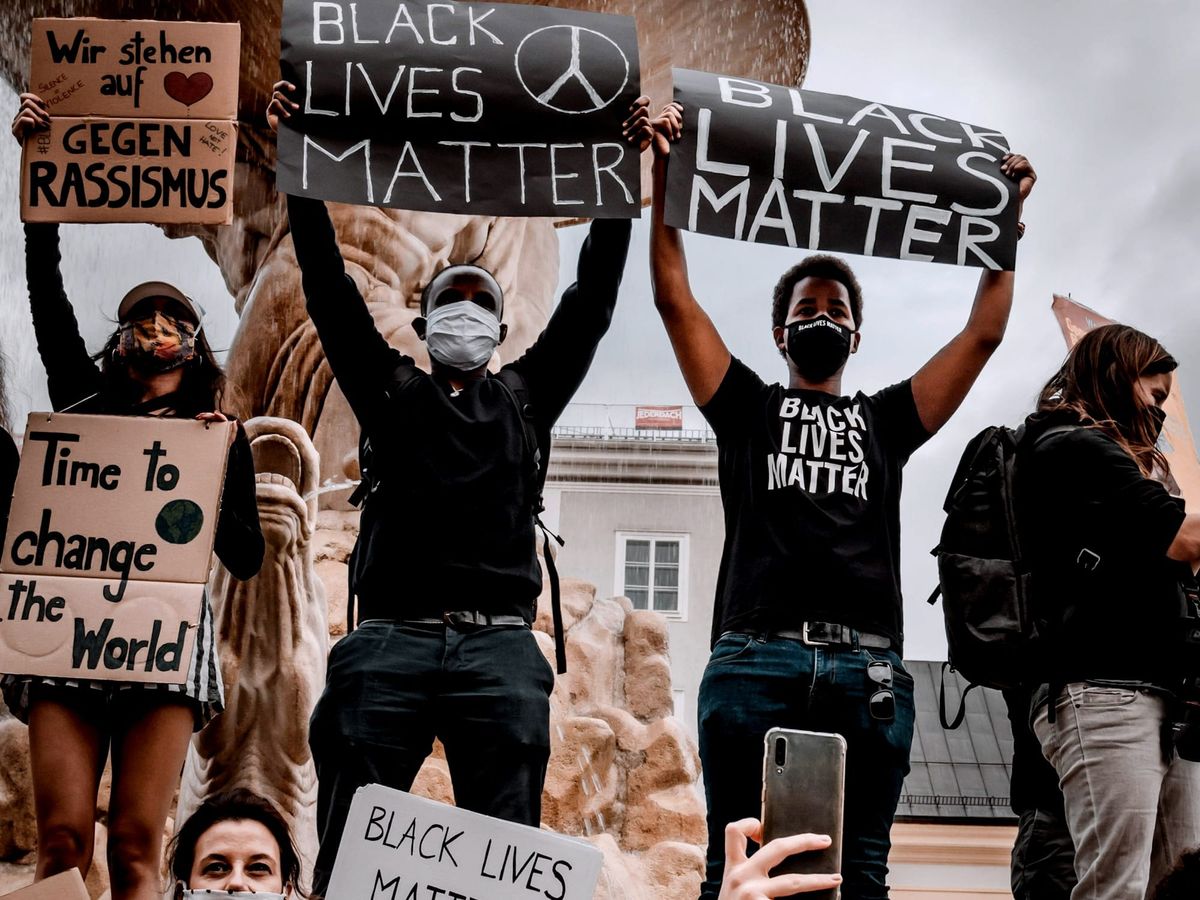
The death of George Floyd in Minneapolis on 25 May 2020 caused shockwaves which reverberated right up to the highest echelons of the European Union. On 18 September 2020 in Brussels, the European Commission announced the launch of its five-year action plan against racism. Entitled ‘Union of Equality’1, this initiative — based on the primacy of law — recognises the existence of structural racism and promotes an intersectional approach to tackling it. This news was well-received by the European Network Against Racism (ENAR), which, in a statement released that same day2, hailed ‘the fact that for the first time, the EU explicitly acknowledges the existence of structural, institutional and historical dimensions of racism in Europe’. However, the organisation, which is a member of the Permanent Anti-Racism Civil Society Organisations Forum, regretted that ‘the plan does not include specific measures to tackle the structural racism and barriers faced by migrants in Europe’.
What’s the situation around Europe five years on? In recent times, the far right has continued to make electoral gains, from Portugal to Romania and Germany, and in some cases has come to power, as in Italy. At the same time, racist demonstrations and xenophobic riots have targeted migrants, as in Cyprus (January 2022), Ireland (November 2023), Great Britain (August 2024), and Spain (July 2025). This led the European Union Agency for Fundamental Rights (FRA) to note in its latest annual report3:
Racism, discrimination, bias-motivated harassment and hate crime are a daily reality for many people. Inequality continues to disadvantage people of various ethnic backgrounds and religions.
However, the worsening general climate has also met with a response from progressive forces. On 17 March 2025, during Anti-Racism and Diversity Week, around forty civil society organisations, including Human Rights Watch4, called European leaders’ attention to the omnipresence of ‘systemic racism’ in Europe and urged them to take action:
In response to fragmented policies and an overfocus on criminalisation and securitisation, we call for a shift from punitive policies to those that prevent harm and repair the damage already done. The goal must be to break down the systems that keep racial inequality in place, as outlined in the EU Anti-Racism Action Plan.
Four days later, the European Left marked the International Day for the Elim-ination of Racial Discrimination5 by stating:
We firmly place our battle against racism within the broader context of our struggle for social justice, closely linked to the fight for real equality for all, regardless of nationality, gender, origin, skin colour, or religion. We know that the dynamics of the far-right and identity ideologies feed off the economic and social crisis.
Finally, in April 2025, the European Trade Union Confederation (ETUC) published a document entitled Empowering Trade Unions to Tackle Intersectional Discrimination6, which recommends that European institutions ‘introduce and foster recognition of “intersectional discrimination” in European legislation’ and calls on trade unions to ‘promote the participation of members from underrepresented and marginalised communities’.
Despite undeniable similarities, it is clear that several strategies are possible for combating racism in Europe and elsewhere. On the one hand, there are civil society organisations specialising in this area of intervention — or, more broadly, in human rights — whose activity consists of calling for action from political leaders or even joining forces with them to enact relevant public policies. On the other hand, there are left-wing organisations — more or less linked to the old labour movement — which place the fight against racism within a broader perspective of social transformation, relying on the mobilisation of workers.
Of course, for these two options, which have been schematically distinguished here, each oscillating between expertise and agitation, there are also certain subdivisions. These are inherent in the competition for the embodiment of a just cause, the representation of a specific group, the accumulation of material resources, media recognition or, more trivially, the fight for (even symbolic) power. These mechanisms transcend the labels that activists claim for themselves, as well as those others with which they refuse to be associated: be they identitarian/universalist; moral/political; reformist/revolutionary; liberal/socialist; racialist/classist, and so on.
Furthermore — without wishing to paint an exhaustive picture of the anti-racist field — it would be unthinkable not to mention the role of intellectuals, particularly déclassé academics, in the evolution of activist debates, which have often taken the form of sterile polemics. These debates are characterised by linguistic inflation that has led to numerous misunderstandings, theorisation disconnected from praxis, petty-bourgeois mistrust of the popular classes, and a scholastic spirit resistant to dialectical method. Still, this is a problem that goes beyond the specific case of the fight against racism, insofar as the social movements find it difficult to produce thinkers emerging from their own ranks. Nevertheless, despite the widespread adoption in recent years of the concept of intersectionality — used by everyone from civil society organisations to the European Commission and the ETUC, with nuances that should not be overlooked — disagreements persist between individuals, groups, and coalitions that are deeply committed to the fight against racism. This can be explained, beyond the common references used, by divergent perspectives based on particular traditions of struggle or which unfold in distinct spaces of mobilisation and socialisation — whether affinity groups, large organisations, social networks, etc., favouring, in the given case, radical, reformist, or revolutionary modes of action.
Intersectionality has become a normalised concept, often perceived as an indispensable and, more particularly, unquestioned tool by many activists who have been involved in the anti-racist struggle for varying periods — as have terms such as ‘race’ or ‘privilege’. This normalisation highlights two intrinsically linked phenomena. On the one hand, there is the European left’s dependence, particularly in this area, on its US counterpart (or, to put it bluntly, American ‘cultural imperialism’). On the other hand, it points in general to the difficulties posed by the circulation of ideas developed in one context and transposed into another, at a time when working-class internationalism is hardly flourishing.
Before providing some answers to the question posed in the title of this contribution, a few preliminary remarks are in order.
Indeed, while there are many obstacles to the anti-racist struggle, the most important, and undoubtedly the one most rarely addressed, is its negative character — just like anti-fascism, anti-sexism, or anti-capitalism. Certainly, while this defect does not diminish the necessity of this cause, it should stimulate us to positively formulate the model of society which we wish to see emerge, and the type of relationships we wish to establish between individuals freed from the chains of exploitation, beyond empty or ambiguous terms such as ‘inclusion’ or ‘diversity’ that have already been integrated into management-speak.
The negative character of ‘anti-racist’ struggle should stimulate us to positively formulate the model of society which we wish to see emerge, and the type of relationships we wish to establish between individuals freed from the chains of exploitation, beyond empty or ambiguous terms such as ‘inclusion’ or ‘diversity’ that have already been integrated into management-speak.
To propose a strategy in this area may seem ambitious given the current conjuncture, which offers little cause for optimism. However, the toxic context around us should encourage us to collectively develop an action plan based on free debate, without sectarianism. This also means avoiding impugning others’ motives — an accusation of which the self-proclaimed guardians of the temple have become specialists, with well-known results. Racism is undoubtedly one of the weapons of choice of the reactionary bourgeoisie in their all-out offensive against peoples and workers, whether they are European citizens or not. Finally, while these considerations relate to Europe — beyond the current borders of the EU — our thinking is free from any form of Eurocentrism and thus rejects the principles of ‘European’ or ‘national preference’. This is because, on the one hand, we must take into account the ‘universality of racism’ — with reference to the work of anthropologist Jean-Loup Amselle — and, on the other hand, also understand that the European space is at the confluence of international dynamics, i.e. the dynamics of globalised capitalism, despite the specific contexts encountered in each state.
The first condition for developing a ‘left-wing’ strategy — though we would prefer the adjectives ‘working-class’ or ‘socialist’— is independence from the forces and other institutions that are at the root of the phenomenon to be combated — i.e. racism — and which fuel and perpetuate it, or merely offer false solutions to this real problem. While the data presented in the European Commission’s reports can be used, at least in part, to inform our thinking, we cannot blindly rely on publications issued by an essential cog in the wheel of capitalism on a continental scale. This is all the truer given that the positions taken on the subject reflect what is tolerable to the bourgeoisie rather than what needs to be said and done from the point of view of the working population.
Furthermore, while the documentation provided by ENAR is useful in many respects, we must not hide what separates us in terms of theory and principles, without questioning the sincerity of the activists involved in the network’s local collectives, with whom we may share many concerns. In this regard, researcher Carolin Müller7 has highlighted the ambivalent role of civil society organisations associated with the top European authorities:
While ENAR provides the EU with extensive research and resources, from which the Commission can draw to articulate its policies, there is no reciprocal exchange or agreement that ENAR’s findings will be implemented. The limited opportunities that ENAR has at its disposal for interventions raise pertinent questions about the independence of civil society organisations and the limitations of their work.
Furthermore, in the current climate, we believe it is risky to harbour illusions about how to respond to racism. Advocacy efforts aimed at changing the practices of EU institutions, member states, or law-enforcement agencies cannot be an end in themselves. To be convinced of this, one need only look at the nu-merous recommendations presented by ENAR in its Shadow Report 2016–2021.8 Let us be clear: it is preferable for policy makers to use language that promotes an open society rather than hateful propaganda designed to stigmatise ‘undesirables’. The two are not equivalent. However, a consistent anti-racist strategy has to be independent; this means not being involved in the implementation of policies enacted by the European bourgeoisie, but rather in the autonomous mobilisation of the working class, not only to tackle the consequences of racism (division, violence, exclusion, etc.), but also to dry up its sources.
Moreover, it is worth recalling the definition of racism proposed by the European Commission on Racism and Intolerance (ECRI)9 and taken up by various institutions:
the belief that a ground such as race, colour, language, religion, na-tionality or national or ethnic origin justifies contempt for a person or a group of persons, or the notion of superiority of a person or a group of persons.
It should also be noted that the use of the term ‘race’ is accompanied by the following clarification:
Since all human beings belong to the same species, ECRI rejects theories based on the existence of different ‘races’. However, in this Recommendation ECRI uses this term in order to ensure that those persons who are generally and erroneously perceived as belonging to ‘another race’ are not excluded from the protection provided for by the legislation.
Furthermore, ECRI distinguishes between two forms of racial discrimination, which may be ‘direct’or‘indirect’. ENAR likewise uses a definition of racism similar to the above:
Prejudice, discrimination or antagonism directed towards someone of a different race, based on the belief that one’s own race is superior.
However, the network distinguishes two other forms: ‘institutional racism’ and ‘structural discrimination’. Furthermore, ENAR justifies the use of the term ‘race’, through its definition as:
The socially constructed classification of humans into groups based on physical traits (such as skin colour), ancestry, religion, genetics or social relations and/or the relations between them.
While it is difficult to reach any consensus definition of racism — since a more precise definition could exclude certain manifestations of the problem — it should be noted that the definitions used by ECRI and ENAR highlight only one facet of the phenomenon: ‘vertical racism’, which corresponds to a hierarchical view, undoubtedly the most commonly accepted, but without mentioning ‘horizontal racism’, which refers to ethno-differentialism, an ideology which, at least in appearance, rejects the idea of superiority in favour of exalting differences between groups in order to better separate them. This omission must be seen in relation to the ENAR’s normalisation of the term ‘race’, despite the now customary precaution of emphasising its socially constructed nature in order to distance itself from the concepts derived from the old biological racism.
However, the warnings of sociologist Micheline Labelle, taken from her 2006 study published by UNESCO10, still seem just as relevant to us:
The use of the concept of ‘race’, as a biological reality or a social and political construct, has perverse effects that run counter to the objectives of civic education and monitoring racism and racist discrimination. Some authors in the humanities and social sciences note that the anti-racist movement has led to an exaggerated celebration of racialised difference, leading to reverse racism in extreme cases.
We do not wish to turn the real responsibilities inside-out: the primary responsibility for the spread of racism lies with the reactionary bourgeoisie and their institutions. Yet almost twenty years on from Labelle’s comments, we may legitimately question the harmful effects of the rehabilitation, in recent years, of the notion of ‘race’ in the European public sphere by left-wing intellectuals and activists who believed — and still believe — this to be an appropriate tool for combating discrimination. We instead believe that this unfortunate resurgence has had the effect of creating the utmost confusion. The xenophobic far right alone has been able to take advantage of this, the better to express an offensive and now uninhibited discourse. In this, it has even revived the aberrations of biological racism, no longer needing even to attempt to preserve the façade of respectability provided by cultural racism.
Consequently, warnings about the use of the concept of ‘race’ issued by several left-wing intellectuals and academics, particularly in the British context — such as Annie Phizacklea in One Way Ticket (1983), Robert Miles in ‘Beyond the “Race” Concept’ (1988), Kenan Malik, The Meaning of Race (1996), Paul Gilroy, ‘Race Ends Here’ (1998), etc. — seem to have been ignored by new generations of activists. These latter refer to the concept of intersectionality — and its triptych of ‘gender/race/class’, which critic Terry Eagleton describes as the ‘contemporary Holy Trinity’ in his Against the Grain (1986) — and to the concept of ‘Racial Capitalism’, but also to the decolonial current of thought and to Critical Race Theory (CRT). Despite the differences between these approaches, they all have in common the fact that they were popularised on US campuses and, despite their more or less stimulating approach on certain points,
Racism is not a rejection of difference but a rejection of equality and a producer of difference.
—René Gallissot
contributed to reifying the notion of ‘race’and paradoxically legitimising it in a deeply divided public space. It should be noted, however, that attacks by conservatives, as part of their culture wars, have surely not aided the debate. Virulent polemics, often launched on social media, have been amplified by the media — through both public and private outlets — and exploited by those in power, including ‘liberals’ engaged in their deadly triangulation with ‘illiberals’. These polemics have had the effect of silencing (Marxist- or anarchist-inspired) left-wing criticism of the aforementioned paradigms which, despite certain relevant aspects, nonetheless present many problems for advocates of individual and collective emancipation.
With these precautions in mind, we believe that the second condition for formulating a socialist strategy against racism is to maintain a critical stance towards the theoretical tools, certain practices, and obscure jargon that have spread throughout large sections of the European left over the last two decades. It is therefore on this fine line that activists in the labour and revolutionary movement find themselves, having to resist attacks from reactionaries on the one hand, and engage resolutely in ‘critique of critique’ on the other, without confusing their right-wing opponents with their left-wing partners, with whom differences may remain on racism, sexism and other crucial issues. In fact, the controversies surrounding ‘identity politics’ have shown the — albeit limited — possibilities of asserting a materialist argument at a time when neoliberal capitalism is in its death throes. Note, for example, the forum of activists from Germany, ‘Decolorise it’ (2012)11 or the book La Trampa de la diversidad (2018) by journalist Daniel Bernabé, published in Spain12. Will the new phase we have entered, at least since the COVID-19 pandemic, be more favourable?
Several objections, particularly from a Marxist-feminist perspective, have been raised against intersectionality — sociologist Danièle Kergoat even spoke of coextensiveness and consubstantiality in the late 1970s, while the Women’s Caucus of the Anarchist Federation used the term ‘kyriarchy’ in 2012.13 In this regard, philosopher Ashley J. Bohrer has compiled references from the American context in her book Marxism and Intersectionality (2019)14: Martha E. Gimenez, ‘Marxism, and Class, Gender, and Race’ (2001)15, Eve Mitchell, ‘I Am a Woman and a Human’ (2013)16, Susan Archer Mann, ‘Third Wave Feminism’s Unhappy Marriage of Poststructuralism and Intersectionality Theory’ (2013)...17 In ‘Marxism Without Apologies’ (2001)18, sociologist Jean Ait Belkhir rightly observes:
despite its place in the now familiar list of race, class, and gender — class is often the last addressed of these issues.
Since then, we have seen that the success of intersectionality has led not only to the relegation of analysis in terms of social class, but also to its erasure in the most right-wing interpretations. This marks a rupture from the seminal article by lawyer Kimberlé Crenshaw, ‘Demarginalizing the Intersection of Race and Sex’ (1989)19, which took into account several variables such as ‘race, sex, class, sexual preference, age, and/or physical ability’ in its analysis of discrimination. Consequently, it is hardly surprising that the intersectional approach promoted by European institutions refers to two definitions that exclude the notion of class. On the one hand, there is the definition in Article 10 of the Treaty on the Functioning of the European Union (TFEU):
the Union shall aim to combat discrimination based on sex, racial or ethnic origin, religion or belief, disability, age or sexual orientation20.
On the other hand, there is the definition proposed by the European Institute for Gender Equality:
Analytical tool for studying, understanding and responding to the ways in which sex and gender intersect with other personal characteristics/identities, and how these intersections contribute to unique experiences of discrimination.
But the discussion on the left is on another level. In her article ‘Intersectionality: A Marxist Critique’ (2018)21, academic Barbara Foley formulates the issues more clearly, particularly around the misuse of class:
An effective critique of the limitations of intersectionality hinges upon the formulation of a more robust and materialist understanding of social class than is usually allowed: not class as an identity or an experiential category, but class analysis as a mode of structural explanation.
However, our concern here is not to list the Marxist — or anarchist — critiques of intersectionality. After all, most of these refutations have been developed in academia and use language that is not always understandable to the general public, and may in any case be difficult to access. Furthermore, it is not enough to lament the erosion of references to class — which can take on a reformist or even conservative tone, from a nationalist perspective — but rather to understand why we have reached this point and why the ‘class struggle’ perspective has receded. This means taking into account the consequences of precarity, particularly among young workers, who, in the absence of direct support linked to resistance to exploitation — typically in their workplace — cling to affinity groups in which they hope to find something other than the horror of unabashed racism or the cruelty of predatory capitalism. The resulting malaise, a product of alienation, is translated into terms of identity, an expression of ideology, and encourages the search for material or moral support from a community of individuals united by a specific oppression and from which there derives a particular, if not Manichean, vision of social relations. No one can blame them for this, given the lack of desirable and tangible alternatives. Let us emphasise one point: the intellectuals and bureaucratic apparatuses of the European left bear their share of responsibility for this state of affairs.
Finally, the third condition for developing a socialist strategy against racism lies in consciously opposing the phenomenon analysed by sociologists Pierre Bourdieu and Loïc Wacquant in their article ‘On the Cunning of Imperialist Reason’ (1998):
Cultural imperialism rests on the power to universalize the particularities linked to a singular historical tradition by causing them to be misrecognized as such22.
Here, the reference is to the US model, which has successfully exported its unique conception of ‘race’ across the globe, particularly to Europe, along with the theoretical approaches mentioned above. This results in an illusory homogenisation of debates in left-wing circles in London, Paris and Berlin, where the arguments rely on quotes from works by theorists published in New York, Los Angeles or Chicago. However, as we mentioned with regard to intersectionality, apposite critiques of this approach — critiques which remain little-known in Europe, despite its appetite for goods ‘made in the USA’ — have been formulated in the United States itself. This should stave off any kind of anti-Americanism and instead encourage a consistent internationalism, by engaging in fruitful dialogue with our counterparts, circulating their work, etc. Here, we are thinking primarily of those high-ranking intellectuals who have undertaken a real work of demystification from a materialist perspective. Such is the case of the historian Barbara J. Fields, who, in ‘Whiteness, Racism, and Identity’ (2001), explained why academics preferred to talk about ‘race’ rather than ‘racism’:
Race is a homier and more tractable notion than racism, a rogue elephant gelded and tamed into a pliant beast of burden. Substituted for racism, race transforms the act of a subject into an attribute of the object. And because race denotes a state of mind, feeling, or being, rather than a programme or pattern of action, it radiates a semantic and grammatical ambiguity that helps to restore an appearance of symmetry, particularly with the help of a thimblerig that imperceptibly moves the pea from race to racial identity23.
In the same vein, in his ‘Marx, Race and Neoliberalism’ (2013)24, political sci-entist Adolph Reed Jr. recalls the fundamentals of a materialist analysis, for our purposes:
A Marxist perspective can be most helpful for understanding race and racism insofar as it perceives capitalism dialectically, as a social totality that includes modes of production, relations of production, and the pragmatically evolving ensemble of institutions and ideologies that lubricate and propel its reproduction.
Finally, in 'The Wrong Durée' (2025)25, political scientist Cedric Johnson offers an incisive review of Cedric J. Robinson’s Black Marxism (1983), which has become famous in certain circles:
Robinson’s corrective to the historical Marx treats race as primordial, a position that distorts the meaning and character of racism in relation to other historical prejudices and commits to a politically cynical perspective of history where racism always dominates, exerting social power without end.
Here again, we could continue to list rigorous refutations of the essentialist, ahistorical and anti-materialist biases that characterise the flawed theories of ‘race’ or racism that are enjoying growing success on these shores. But this would only be part of the solution. For we must also analyse and intervene based on the realities raised by our own fieldwork — otherwise we risk maintaining a passive relationship with culture and distorting our analysis — in conjunction with our comrades confronted with this problem from Morocco to China, via Brazil and Indonesia, as geographer Alastair Bonnett points out in Multiracism (2011). While it may seem paradoxical that part of the anti-imperialist left, captivated by the Ivy League, Hollywood, and Big Tech, should become transmission belts for an imperial logic, it is nevertheless still true that the struggle of African Americans against segregation was exemplary in many ways and, during the twentieth century, inspired the solidarity of the best segments of the European labour and revolutionary movement, in the same way as the struggle against slavery, colonialism, Nazism and apartheid — essential milestones in the great fight against racism and for emancipation. Not to mention the mobilisations of colonial and immigrant workers in Europe — and later their descendants — whether they were autonomous of, in tension with, or linked to the workers’ organisations of their host country. Despite their limitations, these experiences represent valuable resources for understanding the plurality and specificity of the historical traditions of European socialism against ‘race prejudice’ — according to the title of the book by journalist Jean Finot (1905)26 — which are in no way inferior to those of our US comrades with whom we share many com-mon references. This also applies to the struggle against sexism waged from a ‘class struggle’ perspective by the anarchist Mujeres Libres in Spain from 1936 or by the Marxists of Lotta Femminista in Italy from 1971, as well as the fight against racism, from a socialist perspective, by feminist groups such as the Brixton Black Women’s Group, created in 1973 in Great Britain, or the Groupe femmes algériennes, organised in France in 1977.
However, the profound changes brought about by the deindustrialisation of formerly industrialised countries — which decimated entire communities (fuelling mass unemployment, drug addiction, alcoholism, domestic violence, etc.), particularly among immigrant workers and their descendants — have hampered the development of progressive or subversive experiments. Due to the spectacular decline of the labour and revolutionary movement, this has made it more difficult to pass on these experiences beyond the circles of the initiated in which activists from different generations rub shoulders. At the same time, the issue of racism has continued to gain prominence in public debate due to the steady rise of the far right. With the complicity of the right and part of the left, these reactionary forces have constructed immigration as a ‘problem’, of a kind with multiculturalism, Islam (under the guise of fighting Islamism or terrorism), ‘wokeness’, etc. — effectively adopting the methods and slogans of US ultra-conservatives — to further divide the popular classes on the basis of culture or values. Moreover, in such a context, the emergence of a form of specialised anti-racism — outside of European left-wing organisations, or within them, via certain anti-racist commissions — has only served to facilitate the transposition into Europe of the least stimulating vulgate developed in the US.
Demystification remains a truly thankless task, at a time of widespread false consciousness, manifested on the one hand by diffuse or outrageous racism among our class enemies and, on the other, by inappropriate responses from some of our comrades in the struggle. Indeed, theorists who take a more critical approach toward intersectionality are often seen as troublemakers in the eyes of sectarian activists, careerist academics, paid journalists, and greedy publishers. Yet beyond the microcosms of opinion makers attached to their ridiculous privileges, millions of workers from all walks of life are seeking to understand in order to fight, without allowing themselves to be disarmed by defeatist propaganda that only deepens their misery. For the exploited, in all their diversity, understand better than any postmodern sophist that the alternative to stagnation is based on a fundamental principle — unity — and a fun-damental goal — equality. In this regard, in ‘Le racisme n’est pas chez l’autre’ (1985), historian René Gallissot stated27:
Racism is not found in the Other, it is not a rejection of difference but a rejection of equality and a producer of difference, and it is this difference that is extrapolated into culture and nature.
Thus, the slogans that emerged during the struggles of the 1970s in France, Brit-ain and Germany — ‘French workers or immigrant workers: same boss, same struggle!’, ‘White labour can’t be free while Black labour is in chains’, ‘one more Mark for all!’ — remain entirely valid from a socialist perspective, even though the link between racism and immigration is no longer clearly established by some activists, or indeed the link between racism and labour. Let us recall — for reference, and despite its limitations — the tradition crystallised by the Red International of Labour Unions, which defended equality between native-born and immigrant workers at its congresses in 1924 and 1928. Despite the transformations of capitalism over the past century, we choose to stay the course as described by Antonia Darder and Rodolfo D. Torres in After Race (2004)28:
The power of working-class people is embodied in the unequivocal fact that without their labour the capitalist class could not survive. In addition, workers are empowered through their sheer numbers. These are the qualities that, along with important characteristics of organisation, make the working class central to our struggle against racism and social change. In our view, this has nothing to do with privileging class over other oppressions. Instead, it represents our evolving assessment of structural power, both actual and potential, of different groups within society — and the growing recognition that, no matter how one wishes to theorise ‘race’ and racism, all forms of oppression are ultimately linked to the exploitation and domination of both natural resources and human populations.
However, doing this is a necessary but not sufficient condition. For we must articulate the realm of interests, values and principles, by developing a roadmap that offers a way forward for the vast majority of the proletariat, regardless of origin. This involves, in particular, defending or winning the same political and social rights in terms of access to housing, employment, health, education, culture, leisure, etc., for all workers, be they European or non-European, and with or without papers. This can be done without necessarily remaining in the realm of law or fuelling reformist illusions. This also means — particularly in the workplace — striving to abolish the hierarchical or statutory differences that maintain the division between different segments of the proletariat, naturalised by racism, which pits workers against each other for the benefit of employers, hindering class solidarity.
Without limiting ourselves to the material aspects of the problem, we must also address its moral dimension by promoting values alternative to those propagated by the supporters of ‘civil war’ or ‘remigration’ who dream of Reconquista. Indeed, we indicated earlier that one of the obstacles posed by anti-racism is its negative character, especially since the most caricatural, resentment-laden visions present this legitimate cause as leading to less for certain categories of workers instead of a better life for all. We must, therefore, promote a completely different narrative, with enthusiasm, based on the positive dynamics and values that are still alive in our societies: hospitality, conviviality, diversity, solidarity, and so on. Paul Gilroy advocates ‘planetary humanism’ and ‘strategic universalism’ in this regard. The philosopher Etienne Balibar, in ‘Cosmopolitisme et Internationalisme’ (2006)29, for his part invites us to rethink the legacy of Kantian and Marxian thought. This is undoubtedly one of the tasks of our time — provided, however, that we re-enchant the world, not by resorting to the opium of religion, but by reconnecting, for example, with the surrealist project. Finally, the situation created by the terrorist attacks of 7 October 2023 in Israel and the genocidal war waged against the Palestinians have put to the test the principles formally defended by certain anti-racists who have revealed a disconcerting ethnocentrism — through their unconditional support for bellicose nationalism and endorsing practices contrary to the ‘common decency’ dear to George Orwell — through the weaponisation of yesterday’s disasters to justify today’s massacres. This is what separates us from the proponents of ‘double standards’ who have legitimised the censorship, slander, harassment or assassination of those who defend human dignity and the integrity of civilians, regardless of nationality or religion. Here, as elsewhere, we must strongly reject the hierarchisation and unhealthy competition between different forms of racism, which lead to the relativisation or denial of what is very real discrimination. Resigning ourselves to the unacceptable would be to pave the way for pessimism, withdrawal and defeat. It is in conjunctureslike these that the expression ‘socialism or barbarism’ takes on its full meaning.
Notes
1 EU Anti-racism Action Plan 2020-2025, https://commission.europa.eu/strate-gy-and-policy/policies/justice-and-fundamental-rights/combatting-discrim-ination/racism-and-xenophobia/eu-anti-racism-action-plan-2020-2025_en.
2 ‘EU Action Plan Against Racism’, 18 September 2020, https://www.enar-eu. org/eu-action-plan-against-racism-strong-push-on-member-states-to-act-better.
3 Union Agency for Fundamental Rights, Fundamental Rights Report — 2025, https://fra.europa.eu/sites/default/files/fra_uploads/fra-2025-fundamen-tal-rights-report-2025_en.pdf.
4 ‘EU: Confront Systemic Racism’, Human Rights Watch, 17 March 2025, https:// www.hrw.org/news/2025/03/17/eu-confront-systemic-racism.
5 Stand Against Racism:Join the Fight for Equality!’, European Left, 21 March 2025, https://www.european-left.org/stand-against-racism-join-the-fight-for-equality/.
6 ETUC, Empowering Trade Unions to Tackle Intersectional Discrimination, https:// www.etuc.org/sites/default/files/2025-06/V2%20FIXED%20ENGLISH%20 TUAD%20Compendium%20for%20Web.pdf.
7 Carolin Müller. ‘Anti-Racism in Europe: An Intersectional Approach to the Dis-course on Empowerment through the EU Anti-Racism Action Plan 2020–2021’, Social Sciences 10, no. 4: 137, 2021, https://doi.org/10.3390/socsci10040137.
8 European Network Against Racism, Racial Discrimination in Europe, https:// www.enar-eu.org/wp-content/uploads/ShadowReport-2016-2021_FINAL.pdf.
9 ECRI General Policy Recommendation No. 7, https://rm.coe.int/ecri-gener-al-policy-recommendation-no-7-revised-on-national-legislatio/16808b5aae.
10 Micheline Labelle, ‘Un Lexique du racisme: étude sur les définitions opération-nelles relatives au racisme et aux phénomènes connexes’, 2006, https://unes-doc.unesco.org/ark:/48223/pf0000146588.
11 ‘Decolorise it!’, analyse &kritik, 575, 21 September 2012, https://www.akweb. de/bewegung/diskussion-um-critical-whiteness-und-antirassismus-decol-orise-it/.
12 Daniel Bernabé, La trampa de la diversidad. Cómo el neoliberalismo fragmentó la identidad de la clase trabajadora, Madrid: Akal, 2018.
13 The women’s causus of the Anarchist Federation (UK), ‘A Class Struggle Anar-chist Analysis of Privilege Theory’, 2012, https://theanarchistlibrary.org/library/ the-women-s-causus-of-the-anarchist-federaton-uk-a-class-struggle-anar-chist-analysis-of-privile.
14 Ashley J. Bohrer, Marxism and Intersectionality Race, Gender, Class and Sex-uality under Contemporary Capitalism, Bielefeld : transcript publishing, 2019.
15 Martha E. Gimenez, ‘Marxism, and Class, Gender, and Race: Rethinking the Tril-ogy’, Race, Gender & Class 8, no. 2 (2001), http://www.jstor.org/stable/41674970.
16 Eve Mitchell, ‘I am a woman and a human: a Marxist feminist critique of intersectionality theory’, https://libcom.org/article/i-am-woman-and-hu-man-marxist-feminist-critique-intersectionality-theory-eve-mitchell.
17 Susan A. Mann, ‘Third Wave Feminism’s Unhappy Marriage of Poststruc-turalism and Intersectionality Theory’, Journal of Feminist Scholarship, 4 (Spring), 2018, https://digitalcommons.uri.edu/jfs/vol4/iss4/5.
18 Jean Ait Belkhir, ‘Marxism Without Apologies: Integrating Race, Gender, Class: A Working Class Approach’, Race, Gender& Class 8, no. 2, 2001, http://www.jstor.org/stable/41674975.
19 Kimberlé Crenshaw, ‘Demarginalizing the Intersection of Race and Sex: A Black Feminist Critique of Antidiscrimination Doctrine, Feminist Theory and Antiracist Politics’, University of Chicago Legal Forum, 1989, https:// chicagounbound.uchicago.edu/cgi/viewcontent.cgi?article=1052&contex-t=uclf.
20 The Task Force on Equality of the European Commission, https://com-mission.europa.eu/topics/equality-and-inclusion/equality-and-inclu-sion-key-actions/task-force-equality-european-commission_en.
21 Barbara Foley, ‘Intersectionality: A Marxist Critique’, The Multiracial Unity Blog, https://multiracialunity.org/2018/09/26/intersectionality-a-marx-ist-critique/.
22 Pierre Bourdieu and Loïc Wacquant, ‘On the Cunning of Imperial-ist Reason’, Theory, Culture & Society, Vol. 16 No 1, 1999, https://doi. org/10.1177/026327699016001003.
23 Barbara J. Fields, ‘Whiteness, Racism, and Identity’, International La-bor and Working-Class History, no. 60, 2001, http://www.jstor.org/sta-ble/27672735.
24 Adolph Reed, Jr., ‘Marx, Race, and Neoliberalism’, New Labor Forum, 22 (1), 2013, https://americanstudies.yale.edu/sites/default/files/files/ Adolph%20Reed%20-%20Marx%2C%20Race%2C%20and%20Neoliber-alism.pdf.
25 Cedric Johnson, ‘The Wrong Durée: The Politics of Cedric J. Robinson’s Racial Capitalism’, NonSite.org, 29 January 2025.
26 In English translation, Jean Finot, Race Prejudice, New York: E.P. Dutton & Co, 1907.
27 René Gallissot, ‘Le racisme n’est pas chez l’autre : La synthèse nécessaire
: continuité historique et continuum social’, L’Homme et la société, 1985.
28 Antonia Darder and Rodolfo D. Torres, After Race. Racism after Multicul-turalism, New York : New York University Press, 2004.
29 Étienne Balibar, ‘Cosmopolitisme et Internationalisme: deux modèles, deux héritages’, in the multi-author volume Philosophie politique et horizon cosmopolitique: la mondialisation et les apories d’une cosmopolitique de la paix, de la citoyenneté et des actions, Paris: UNESCO, 2006