

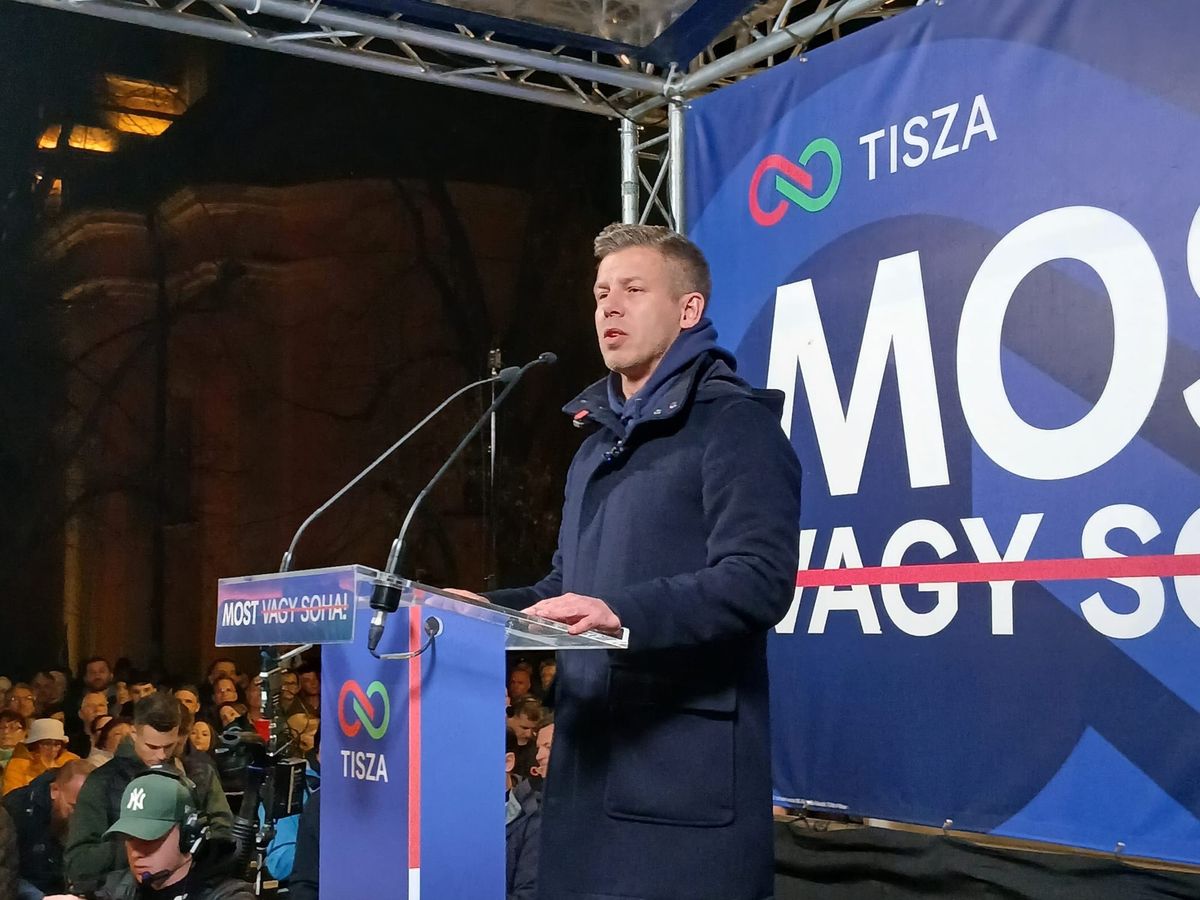
In the aftermath of Viktor Orbán’s defeat in the Hungarian election this 12 April, many expressed joy and relief that his increasingly repressive sixteen-year rule came to an end at the ballot box. Péter Magyar’s Tisza party secured a constitutional supermajority in Hungary’s parliament, propelled by turnout approaching 80 percent, which is the highest level recorded since the collapse of state socialism. The result brings to an end Orbán’s long-proclaimed experiment in ‘illiberal democracy’ such as we know it. Orbán’s downfall sparked debate and despair among his most loyal followers at home and across the Atlantic, seen as a blow to the global far right.
In response, some commentators have argued that a regime capable of being so decisively removed at the ballot box cannot have been genuinely authoritarian. This conclusion misunderstands the dynamics at work. The turning point was not the moderation of Orbán’s system, but rather its exhaustion, which showed Orbán’s vulnerabilities in revitalising and reinventing his far-right movement. After all, Orbán’s ‘illiberal democracy’ can be described as ‘electoral authoritarianism,’ similar to the current state power in Turkey. Orbán’s system was creative particularly because he crafted his illiberal democracy through the scraps of liberal democracy, which now seems like the default for the far right everywhere. Orbánism survived for so long electorally, because Orbán’s clientelist and socially exclusionary project focused on creating consent for a prolonged rule. Orbán, having written his master’s dissertation on Antonio Gramsci, took the idea of cultural hegemony incredibly seriously. However, in the past years, the system’s entrenched corruption, economic struggles, isolation within the EU, and a series of high-profile scandals undermined public trust.
Magyar succeeded where others had failed before by activating disengaged voters and absorbing the opposition vote, marginalising rival parties whose credibility had already been exhausted in previous elections. His Tisza party’s programme was rather less convincing, and the most decisive aspect of the election was removing Orbán. Magyar managed to pull off a united front against Orbán, by expanding the umbrella of voters as much as possible with a centrist, sitting-on-the-fence approach to both domestic and foreign policy. Magyar is a former Fidesz party asset, once seen as an insider. This was appealing to many voters, as his break with the Orbán system seemed more convincing. However, this arrangement makes Tisza’s ideological foundations extremely thin, and it carries the risk of this party imploding over its internal contradictions as well
Peter Magyar managed to pull off a united front against Orbán, by expanding the umbrella of voters as much as possible with a centrist, sitting-on-the-fence approach to both domestic and foreign policy.
as the expectations raised among voters who want a decisive break with Orbánism and for his cronies to be held accountable.
The deeper questions concern how Orbán succeeded in staying in power for so long; how his Hungarian example mobilised the far right globally; and what lessons should be learned from the final breaking of his rule.
Power patronage
Seva Gunitsky, a political scientist at Queens University, made a public comment on Substack following the 12 April election:
»Krastev called Orban the right-wing Castro, which I think is exactly right: the leader of a small relatively insignificant country that nevertheless became the ideological lodestar for a global movement due to great power patronage.«1
If this analogy — Orbán being compared to a communist leader — may seem surprising, it stems from the scale of their global influence rather than any sort of ideological similarities. Ivan Krastev explained in an interview for Equator magazine2 that Hungary, despite its small size, became a model and a reference point for the global far right particularly following the 2015 refugee crisis. Unlike most leaders in Central and Eastern Europe, Orbán consistently viewed politics on a scale larger than the merely national or regional plane. In this respect, as Krastev explains, he occupied for the right a role akin to the one Fidel Castro once played for the Left: the head of a small and marginal state who nevertheless projected himself as a figure of international consequence.
Orbán invested for years in opinion research across multiple European countries and treated Hungary not merely as a national project, but as the nucleus of a broader ideological realignment. His aspirations transcended the civilizational platitudes of ‘West’ versus ‘East’ often championed by Euro-liberals. Orbán believed that the West is in decline and the East, led by China, is ascending, which will trigger a hegemonic realignment globally. Orbán was a stand-alone advocate of this new reality within the EU, which is now growing even more hostile to Russia and China, as well as to fellow NATO-member Turkey. Orbán’s openness to China and Russia were mainly motivated by economic realism, in order to seek new markets, and diversify Hungary’s energy imports and trade.
Conversely, Orbán’s friendship with Benjamin Netanyahu and extreme pro-Israel policies were purely ideological: as to many on the far right, Israel was the blueprint of a heavily militarised religious ethnonationalist state fighting for the soul of white civilisation against ‘the brutes.’ Orbán was heavily inspired by Israel and Zionism, expressing a similar vision for Hungary: a small ethnostate under ironclad rule was to preserve ethnic purity by fighting immigration and excluding minorities. And vice versa: Netanyahu praised Hungary countless times for its extreme xenophobic and exclusionary system, which led to significant cultural and intellectual exchange between Budapest and Tel Aviv, leading the charge globally in fascist development.
Orbán found many fans and supporters across the Atlantic as well, as he was one of Trump’s first European backers in the 2016 American presidential race. Orbán sustained this positive relationship with Trump and his MAGA base: he invited Tucker Carlson to Hungary, offered to fund and host the CPAC (Conservative Political Action Conference), and funded various American ideologues in Budapest through his Potemkin organizations. The favour was reciprocated by president Donald Trump, who sent vice-president JD Vance to Budapest to campaign for Orbán ahead of the 12 April vote. As it turned out, this didn’t help, and if there is one thing Trump detests, it’s a loser, which could jeopardise their future relationship and Orbán’s standing on the American right.
Still, given that Orbán conceded power so gracefully, it’s likely that the world hasn’t seen the last of him. He already plans to rehabilitate his image and reinstate himself in the European political elite.
The Budapest scene
Most importantly, under Orbán, Budapest had become the intellectual and financial hub of the global far right. Orbán created an extensive state-funded institutional ecosystem to position Hungary, and particularly Budapest, as an international hub of right-wing and nationalist-conservative thought. This publicly funded network included think tanks, journals, periodicals, conferences, fellowships, and various high-profile foreign intellectuals sustained to project Hungary’s influence beyond borders. As Krastev noted in the Equator interview: ‘If you were a far-right party that needed a loan, a Hungarian bank would give it to you. If you were a far-right intellectual, Budapest would treat you as a genius’.
However, this this effort rested on a fundamental contradiction: a political philosophy that rhetorically exalted localism, tradition, and rootedness was simultaneously organised as a globally networked, capital-intensive export industry. This intellectual milieu was completely detached from Hungarian society at large. Foreign far-right influencers and intellectuals were largely indifferent to Hungarian culture, history, and the lived experiences of the locals, treating Hungary as a well-subsidized staging ground for international culture war production. The price tag was $105,000. That, according to freedom-of-information disclosures obtained by the Hungarian investigative outlet Átlátszó, is what American right-wing pundit Rod Dreher cost Hungarian taxpayers over the past year alone. The sum amounts to roughly five times the average annual wage in Hungary. Dreher’s purported epoch-making contribution, Orbán suggested, lay in his role in popularising American conservativism merged with an European one, and putting Hungary on the map of this global culture war. Dreher was only the tip of the iceberg of Orbán’s Potemkin cultural sphere.
According to Átlátszó,3 CPAC Budapest was financed almost entirely from Hungarian public funds with no meaningful private contribution. The central institutional actor examined is the Centre for Fundamental Rights (Alapjogokért Központ), a think tank closely aligned with Fidesz, which officially hosted CPAC Budapest. The Centre received its funding through the Lajos Batthyány Foundation (BLA), a legally designated ‘public trust fund performing a public function’. CPAC is part of a wider ecosystem of BLA-funded organisations — such as the European Conservative magazine, the Danube Institute, and other internationally oriented entities — that have supported Fidesz’s alliance-building efforts
Under Orbán, Budapest had become the intellectual and financial hub of the global far right.
within the European radical right. Speakers who have appeared at CPAC Budapest included Alternative für Deutschland leader Alice Weidel, Geert Wilders (of the Dutch Party for Freedom), Santiago Abascal (from Spain’s Vox), Argentinian president Javier Milei, and Zionist influencer Ben Shapiro. Fugitive war criminal Benjamin Netanyahu was also confirmed as a speaker at CPAC Budapest in 2026 despite international arrest warrants, but cancelled his appearance at the last minute.
Orbán’s aspiration to remake European conservatism through the lens of Trumpian revolution is treated as having failed not because it lacked ambition, but because it attempted to manufacture tradition, authority, and moral legitimacy administratively and from above. With Orbán’s power gone, what remains is not a coherent doctrine or rooted intellectual legacy, but a cautionary case study in the limits of top-down ideological engineering.
Foreign policy
The paradox is stark: Orbán was ultimately defeated as an ‘internationalist’ figure, despite having built his political brand on hostility to globalism, and his defence of national sovereignty over the EU’s machinations. Thus, his campaign hardly spoke to everyday domestic concerns. Instead, it revolved around the world beyond Hungary’s borders: unceasing attacks on ‘globalist puppet’ Volodymyr Zelenskyy, appeasing Vladimir Putin, shilling for genocidal Netanyahu, gestures toward Trump, and openness toward China. By contrast, his challenger, Péter Magyar, stayed focused on the mundane pressures of Hungarian daily life: overstretched healthcare, living standards, and economic hardships. Orbán, absorbed by the stage of global geopolitics, came to resemble the very forces he claimed to oppose.
With Western and Southern Europe becoming increasingly critical of Trump, US hegemony, and Washington’s reckless wars damaging the global economy,
Orbán was ultimately defeated as an ‘internationalist’ figure, despite having built his political brand on hostility to globalism.
the US leadership sees Eastern Europe as a NATO stronghold now — and also more aligned in the ideological sense. JD Vance’s visit to the region signalled this commitment to figures like Orbán, as US diplomacy is increasingly ineffective, partners seeing America as a rogue state after illegally assaulting Iran and Venezuela.
Even though Hungarian voters weren’t concerned as much with foreign policy, Orbán’s close ties to the Kremlin were a central issue in the election. Many analysts are quick to frame Orbán’s defeat merely as an issue of corruption and the economy, that only reinforces Magyar’s technocratic campaign messaging, that ultimately nothing else matters, not even ideology, principles, or identity politics. Which is clearly not the case. As Richard Seymour frames it in his book Disaster Nationalism: ‘People rarely vote for their interest, construed as immediate concern for their wallets. … decades of research have failed to find any evidence that voters respond to personal economic suffering by punishing the incumbent.’4 Seymour, instead, describes resentment as a mobilising emotion, that is essential for justice. Even though this resentment, that should be targeted at systems, is mostly impersonal and obscure, Hungarians had found an object for it: Russians. Popular anger was harnessed into slogans like ‘Russians go home!’ or depicting Orbán on Soviet-era posters, which also showed how this anger is still fuelled by Cold War era grievances and the Soviet invasion of Hungary in 1956. Ultimately, this sense of resentment of Orbán drove Hungarians to the polls, precisely because his system cuddled authoritarian leaders of the Big Bad East, and undermined Hungarian people’s sense of belonging to Europe and Western civilization. This is why Magyar’s victory was framed as a ‘Return to Europe’ by the global media. Orbán’s defeat could be cast as a victory for the EU, notwithstanding its tattered morale following its role in the Gaza genocide, its failure to uphold international law in Venezuela, Lebanon, and Iran, the deepening energy crisis, and the rift between the US and its NATO allies.
It was easy to see this as issue of shallow identity politics rather than a convincing anti-imperialist position or solidarity with Ukraine, because Hungarian society did not express the same anger at Netanyahu and Israel. Hungary under Orbán was a firewall for Israel within the EU, Orbán being Netanyahu’s closest ally in the bloc. Hungary left the International Criminal Court to welcome Netanyahu to Budapest, and intervened in South Africa’s genocide case but on Israel’s side. This shameful arrangement did not spark any criticism against Orbán in Hungary which exposed its position on Ukraine as morally bankrupt, displaying selective empathy and double standards. The majority of Hungarians still sympathize with Israel over its victims precisely because of a culture of white supremacy that produced Orbán in the first place, and not the other way around. With Magyar signalling an even harder crackdown on immigration than Orbán, this white supremacist, exclusionary order is hardly going to be challenged in any way.
Spring wind
Péter Magyar, with a background in law and diplomacy, comes from inside the Fidesz world, and Orbán was seemingly paralysed in how to challenge him effectively. Orbán was used to having centre-left and liberal challengers, who were easy to target and demonise. However Magyar represented the same nationalist, right-wing order as he did. Orbán’s rule was marked by his heavy crackdown on LGBTQ rights and widespread stigmatization of the people. In summer 2025 when the Fidesz government announced it would prohibit Pride parades, nearly half a million Hungarians protested in Budapest in defiance of the ban, holding Hungary’s biggest ever such march. However, Magyar was nowhere to be found, refusing to comment on the issue. Many praised Magyar for ‘not taking the bait’, but many criticised him over his moral cowardice on a key question. However, Magyar stuck with his technocratic messaging, and claimed that LGBTQ rights are not his priority, and he only cares about the economy. Magyar’s commitment to socially conservative principles seemed to help him win against Orbán. Still, these choices could also signal a future break within the new ruling party. Many people already abandoned by Orbán’s system may see their interests and needs being ignored or sidelined by Tisza.
A poll conducted by Partizán, a Hungarian left-wing media firm, showed that a decisive majority of Tisza voters have left-wing sympathies, rather than right-wing ones. Given that Tisza makes more overtures to conservative voters and champions right-wing policies, a rupture with this electoral base is possible and maybe even inevitable. Indeed, another major dimension of the united front against Fidesz constructed by Magyar is that it electorally collapsed the Left: since April’s election, no left-wing party is represented in the national parliament. Furthermore, despite global headlines that frame Magyar’s victory as a victory for liberalism over illiberalism, such conclusions are misguided. Hungary’s new Prime Minister shares the conservative consensus on many decisive issues, like LGBTQ rights, taxation, abortion rights, immigration, pro-Israel policies, and more. Magyar’s first weeks in office showed that he is keen on protect-ing this exclusionary order, but in a more disciplined and EU-compatible way. Regarding foreign policy, Magyar did not promise significant break with Orbán’s way, either. In his first press conference as Prime Minister, Magyar confirmed that he would continue to cooperate with Russia on energy imports, would maintain a normal relationship with China, and would not change pro-Israel policy, either, having already invited Netanyahu to Budapest for the anniversary of the 1956 Revolution. Magyar also criticised the EU and its leadership, claiming that it often contradicts national interests — a talking point familiar from Orbán, albeit now posed in terms that are far less confrontational with Brussels. Magyar’s first diplomatic visit will be to Warsaw, not Berlin or Paris, to repair the country’s deteriorated relationship with Poland. This indicates that Magyar would focus on the Visegrád states and Central European region rather than pursue global ambitions like Orbán inbetween rival hegemonic powers. Ultimately, Orbán’s downfall was caused by his geopolitical megalomania. Invested in reconfiguring the collapsing US-led international order and benefiting from this realignment, he ended up dropping the ball in his own, national election.
Notes
- https://substack.com/@hegemon/note/c-243958816
- https://www.equator.org/articles/the-mittel-man
- https://english.atlatszo.hu/2024/05/30/cpac-budapest-was-fully-fund-ed-by-the-hungarian-taxpayer-to-the-tune-of-possibly-more-than-3-million-euros/
- Richard Seymour, Disaster Nationalism, London: Verso Books, 2024, p. 28.